Showing posts with label Reading Notes. Show all posts

Saturday, December 2, 2017

Week 14 Extra Reading: Georgian Folktales Part A

I decided to do an extra reading this week, and came across Georgian Folktales! Below are the notes I took from some of the stories I really liked and would consider retelling during the last week of class!
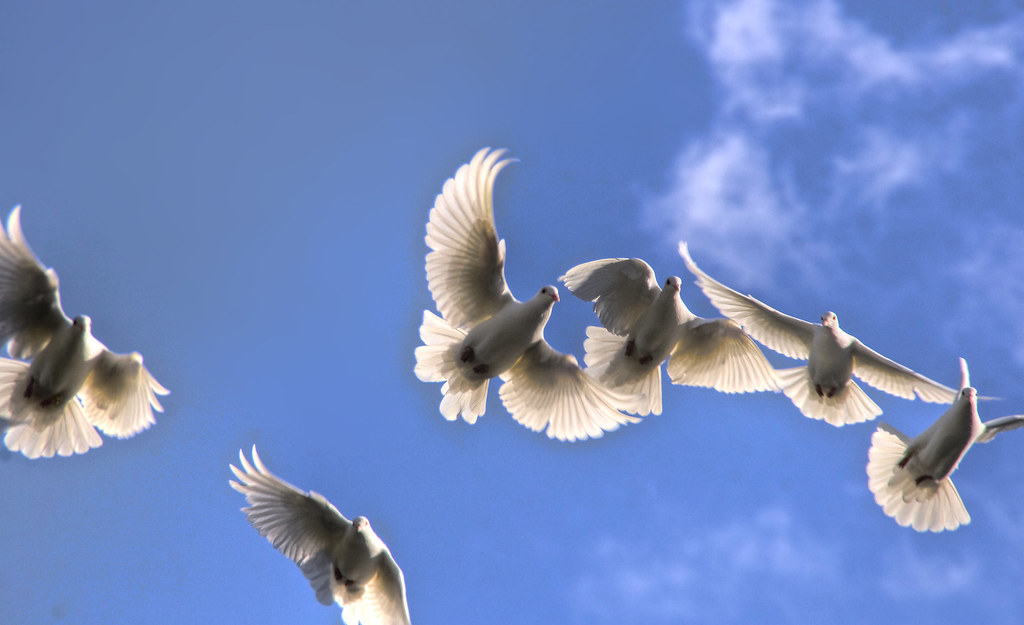
(Image Information: On The Wings of a Snow White Dove
Liz West Source: Flickr)


Master and Pupil
  • The character of the pupil not only showed what it means to be overconfident but then also that those who cause harm are punished eventually (the devil).
  • I would retell this story from a daughter's point of view. This whole story was spent on boys and the master is the devil, but how different would this story be if they were all daughters, or a mother came to the devil?
Fate
  • It's interesting to see how this story worked out, and how the weaver's daughter never actually knew the person who put the dagger in her was now her husband
  • This story does a good job at showing how fate cannot be escaped, and what's meant to be will happen
  • I think I might want to make this story more modern, and maybe instead of the prince putting a dagger in the daughter make it where he breaks up with her. She would be devasted, but fate would bring them back together!
The King and the Apple
  • This story reminded me of Aladdin, where a genie comes out and three wishes are granted
  • In this case, there were three questions that were to be asked, and if the boy answered, the king would not lose his head
  • If I were to retell this story, I would definitely combine the story of Aladdin and this story together to come up with something completely brand new 
The Shepherd Judge
  • I can just imagine retelling this story from a modern point of view, with more modern English dialogue
  • This story was super fun to read! I liked how the judge listened to both sides, and then made a judgment as to the decision. It would be fun to retell this story as if it were "Judge Judy" or some modern judge TV show. 
Mingrelian Proverbs
  • Just from the old English, I couldn't really understand what all of these meant
  • It would be really fun to tell this from a modern point of view, or make it more college-related
Bibliography: Marjory Wardrop's Georgian Folktales Reading Guide Part A

Wednesday, November 29, 2017

Week 14 Reading: Brothers Grimm (Ashliman) Reading Guide Part B


(Image Information: Mt. Fox and Mt. Dawson with Dawson's Glacier
Photocrom Prints Collection at Library of Congress Source: Wikipedia)


Here are some notes of the some of the stories I really liked in Part B of Ashliman's Brothers Grimm unit!


The Fox and the Cat

  • Short, sweet, and simple - I like how this story is able to deliver a great message to children about character and humbleness without directly stating it
  • I think it would be interesting to make this story using people, different animals, etc. This story could easily be retold from a various amount of perspectives - all while still delivering the same message 
Simeli Mountain
  • I am still confused as to when the rich brother was in the mountain why he said "Open up" instead of "Close". The whole time we have read that they say "Open up" before going in and "Close" on their departure. Maybe this would be something I could clarify in my retelling.
  • I like, again, how the story was short, simple, sweet - and left a great message regarding greed and its consequences. 
The Duration of Life
  • I absolutely LOVED this story - what a cute way to talk about how different animals and people live different lengths of life
  • It would be fun to somehow incorporate cats and their nine lives in here, or make the story adhere more to my religion and somehow bring in reincarnation 
The Peasant and the Devil
  • I certainly did not expect the peasant to be the one who had the good luck and was the one who taught the life lesson in this story - I certainly thought the devil would cause some harm but this had a happy ending
  • I might retell this story and twist it to where it's not a happy ending and has to do with the devil!


Bibliography: 
Dan Ashliman's Grimm Brothers' Children's and Household Tales Reading Guide Part B

Tuesday, November 28, 2017

Week 14 Reading: Brothers Grimm (Ashliman) Part A

Below are some notes for the stories in Brother Grimms Part A of the Ashliman Unit that I found interesting, and would probably consider using in my storytelling post this week.

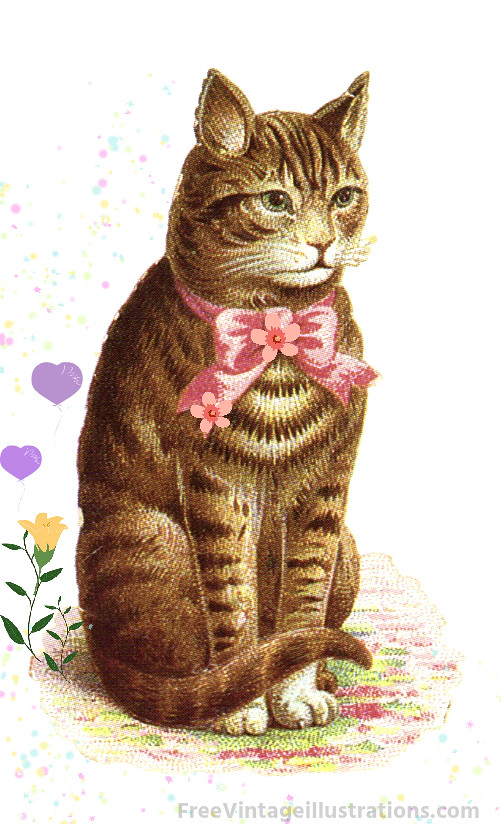
(Image Information: House Cat with Bow
Free Vintage Illustrations Source: Flickr)


Cat and Mouse in Partnership

  • This title was interesting because for once, I thought it would be a story about a cat and a mouse getting along - but it was to catch the attention of readers
  • To create a new story, I would have to use two animals that supposedly don't like each other - cat and dog, mouse and elephant, snake and mouse, etc. 
  • The story was predictable the whole time, and using the amount of fat eaten as names for the godchildren was hilarious - this would be a fun story to retell!
The Wolf and the Seven Young Kids
  • This story was nothing I had expected from the wolf disguising himself to pulling out whole children goats and replacing it with rocks in the wolf's stomach 
  • It would be fun to completely turn the story around with baby wolves fearing a goat, and just seeing how that would play out. Usually, wolves are deemed as the "villain" characters but it would be interesting to make them the "good guys" for once.
  • I liked how unpredictable this story was the whole time from the beginning until the end and included a great amount of detail to allow for imagination 
The Seven Ravens
  • I am still in disbelief how casual the daughter just cut her finger and gave it to get the door open
  • We also never really find out what happens to the bone, so if I were to rewrite the story, I might include more detail on that 
  • I would also want to make this story more reflective and have some type of take-away message instead of just ending. 
Little Red Cap
  • I have never heard of a retelling of Little Red Riding Hood in this way, and it's hilarious how they call her Little Red Cap
  • The story also gives background information about why her name is that way, and I'm not too sure if in the story we are accustomed to that we are ever told why her name is Little Red Riding Hood
  • It's also nice that the ending concluded with what happened to everyone in the story
  • I might want to change up the name just as this story did - Little Red Hat, Little Red Scarf, etc.
Rumplestiltskin
  • I was really excited to read this story because I wanted to compare it to Tom-Tit-Tot
    • There were quite a few differences as there wasn't much of background story to developing the mother and daughter scene as in Tom-Tit-Tot, and in Tom-Tit-Tot, there wasn't any mention of the girl giving anything in return for the services provided. 
  • After reading Tom-Tit-Tot, and this story, I might just even consider making my own version and keep some of the same elements from the stories of both. I can now understand why different fairytales are interpreted differently around the world. 

Bibliography: Dan Ashliman's Grimm Brothers' Children's and Household Tales Reading Guide Part A


Wednesday, November 8, 2017

Week 12 Reading: English Fairy Tales Part B

Today, I read Part B of the English Tales reading. Below are the notes I took on stories that I found interesting and, possibly, wanted to retell this week's story

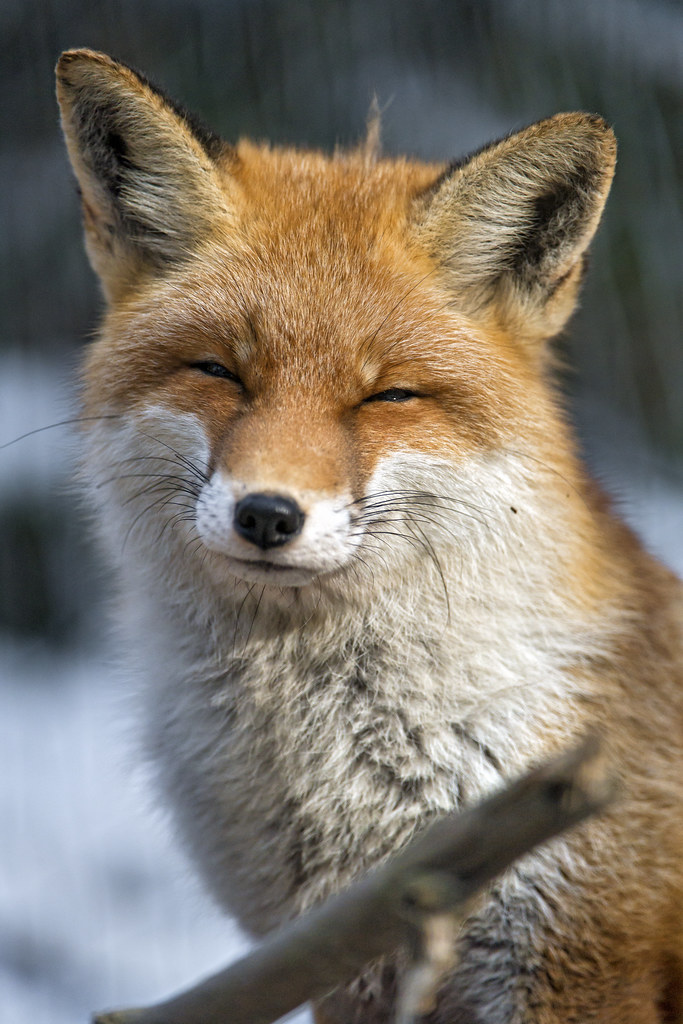
(Image Information: Fox with Almost Eyes Closed 
Tambako the Jaguar Source: Flickr)


Henny-Penny

  • This story makes the fox out to be the evil character, which is always assumed since foxes are sly
  • It would be a great way to retell this story where the fox is innocent and another animal is masked as "evil"
  • I have never heard this tale before, but this was an interesting read 
Molly Whuppie
  • In this story, we never really know what happened to the giant's wife
  • If I were to retell this story, I would extend the plot line and talk about what happens to the giant's wife 
  • I also might include a different ending that involves Molly Whuppie and all three sisters getting married because at the end of this story, they just say that she marries the youngest son after getting the king the giant's ring 
Johnny-Cake
  • It seems that the fox is used in many English tales to serve as the sly character, as it was in this story as well
  • We never are really told the meaning behind Johnny-Cake or why it was named that way so if I retell the story, I would want to include background information or somewhere in the story get the information in there 
  • It would also be a good story to make more 21st century type of story 
Mr. Miacca
  • I like how this story develops the boy to be clever, and how he got away
  • I would want to retell this story from the boy's first-person perspective
  • We only see the boy's mother once in this story warning about Mr. Miacca so it would be nice to include her more and her role in explaining the background story about this myth regarding Mr. Miacca
Fairy Ointment
  • The language in this story was very peculiar, and it helped to have the notes before the story that talked about how certain words like squinny or poll to mean squinty or head, respectively 
  • This would be a fun story to tell from a 21st-century perspective 
  • Dame Goody is the main character in this story, so it would also be a good way to give her more of character development and talk more about her background story when introducing her to the story. 
Bibliography: Joseph Jacob's English Fairy Tales Reading Guide Part B

Tuesday, November 7, 2017

Week 12 Reading: English Fairy Tales Part A

(Three Little Pigs - Third Pig Builds a House
Leonard Leslie Brooke Source: Wikipedia)


I found myself engaged in Part A of the English Fairytales, and below are the notes I took while reading some of the stories:


Tom Tit Tot

  • I really enjoyed this story, however, it's so interesting that this English fairy tale resembled Rumplestiltskin, which I believe is a German fairy tale. It was interesting to read another version 
  • The main characters end up being the daughter and Tom Tit Tot - I think it would be interesting to retell this story from a futuristic point of view with updated technology, etc.
The Rose Tree
  • This story was not what I had expected at all
  • The little girl ends up being a bird that becomes the main character of this story
    • If I were to retell this story, I would make it where the girl is not killed but that her hair is chopped off. I was thinking to take a more modern approach and have the girl in pain due to lack of self-confidence, but soon she is discovered by a model agency in which she becomes a famous model. 
    • She can then be asked to travel the world and can bring her family with her on this journey with her career and she chooses to take her dad and brother, only. 
  • I'm not sure where the girl's birthmother ever played a role in this story as they never really develop her character. It would also be interesting to retell the same story, but also include the girl's birthmother and her role in the story. 
The Old Woman and Her Pig
  • This story was like telephone in that there were a chain of events that had to occur to achieve the result desired 
  • Just to get the pig over the stile so the woman could get home, all of these events occurred 
  • It would be fun to retell this story and completely change the chain of events 
Mouse and Mouser
  • This story seemed more like a nursery rhyme 
  • I'm not sure how I would retell this story, but the style of writing in this story was very unique
  • The two main characters banter back and forth with witty remarks - so it might be fun to just completely retell this story with my own made up remarks 
The Story of the Three Little Pigs
  • The ending on this story is completely different from the way I was ever told this story
  • It's interesting to see how across different cultures that the same nursery rhymes or fairy tales are tweaked
  • If I were to retell this story I would try to make the ending more modern and different from the one I have heard of before, and this one in this story
Bibliography: Joseph Jacob's English Fairy Tales Reading Guide Part A

Wednesday, November 1, 2017

Week 11: Reading Notes - Native American Hero Tales Part B


Part B of the Native American Hero Tales presented some pretty interesting tales. Again, it was really interesting to relate these stories back to Indian tales I have read before. From character development to the plot lines, there were lots of similarities. Below, I jotted some thoughts regarding the stories I really found interesting in Part B.

(Image Information: Native American Chiefs
Author not indicated Source: Wikipedia)


Lodge-Boy and Thrown-Away

  • This story made me think of Dr. Seuss's "The Cat in the Hat". The boys kept doing the opposite of what their father told them and came to prove him wrong. I am not entirely sure the meaning behind this. But there was symbolism in trying to explain things like "why snakes heads are flat". 
  • We merely meet "Red-Woman" for a short scene. There is no background information about her, and her story. I think it would be interesting to retell this story by adding some background information regarding Red-Woman and character development. This would also make sense later when the father realizes who had killed his wife - as I still don't understand how he knows just looking at his wife that Red-Woman did it. 
The Son-In-Law Tests
  • I thought this story really had a plot that was hard to follow. I found myself getting lost at times, and finally, at the end, the story concludes with "and that was the origin of the pike". I guess I wasn't really able to follow this story.
  • If I were to retell this story, I would do the opposite gender. I would name the story "The Daughter-In-Law" tests and create different scenarios for this gender change. 
Dirty-Boy
  • This story reminded me of the Ramayana when Rama was told to break Shiva's bow in order to be suitable for the King's daughter
  • This story also had its own plot line as to what the men must do to marry the King's daughter. I think it would be a great way to tell this story by changing the gender as well. It would be interesting to see how this story could be different with women trying to gain acceptance from the queen for her sons. How fun would that be?
  • I like how this story gives the message that 1) in order to find the one you're supposed to be with you have to look past superficial things 2) the person who you end up being with may not be who you expected. 
Bibliography: Tales of the North American Indians by Stith Thompson Reading Guide Part B

Tuesday, October 31, 2017

Week 11: Reading Notes - Native American Hero Tales Part A

(Image Information: Bald Eagle Portrait
Saffron Blaze Source: Wikipedia)


I decided to read some of the hero tales in the Native American unit. Just generally speaking, reading part A reminded me a lot of Indian tales. There was a lot of symbolism, a message with each story, and they also weren't very short stories. Each story had at least two parts, and I know with such a huge plotline in many Indian tales that it takes some time to read, especially the epics. It makes me wonder how these stories are used in the Native American religion: are they used as folktales or are these stories held as part of religious tales. 

My favorite story out of Part A was the following: 

The Jealous Uncle
  • This story reminded me of the part in Mahabharata where Kamsa didn't want Krishna to be born, so 7 infants were killed. The difference in this story was that only boys were killed in this story 
  • This story definitely had a huge plot as it was a story that lasted 3 parts. 
  • Each item that was placed in that toy box had a role, and it symbolized each of his actions throughout the story. 
  • If I were to retell this story, I think I would want to tell it from the opposite gender perspective. It would be interesting to see how different this story would be if it was flipped, and whether the same scenarios would occur. 
  • I think it would be even better to retell the story from a girl's perspective, have different items put in her box, and different scenarios. I'm not sure if this would be deemed gender stereotyping, but it also would be a fun way to retell the story. 
Bibliography: Tales of the North American Indians by Stith Thompson Reading Guide Part A


Sunday, October 29, 2017

Week 10: Extra Reading - The Life of Buddha


(Image Information: Big Buddha
Shih Ruchang Source: Wikipedia)

I decided to read from the Indian Unit, because there is still a lot of stories I wasn't able to read during the Epics of India class. Something that constantly intrigues me is how Buddha/Siddhartha used to be Hindu, and then he decided to come up with Buddhism. I don't think a lot of people know that Buddha used to be Hindu, but I see the similarities in the two religions all the time as one of my best friends is Buddhist. These stories were really helpful in giving background information regarding the events throughout Buddha's life. Here are just a few of the notes I took regarding these stories:


  • The amount of detail in these stories is amazing - it really helped to capture what was happening
  • A lot of these stories are told in third person perspective so it would be a great way to retell these stories in first person perspective
  • While reading these stories from Part A, I still wonder why Buddha didn't originally like the ideas of Hinduism? Were his parents Hindu? I feel like a lot of these stories didn't give a lot of background information from the Hinduism aspect
  • I think from the second first and second story from Part A, we are given ideas as to why Buddha was named the way he was, but I don't think there was ever really an explanation (unless stated in Part B)
    • It would be a fun idea to also retell the first or second story, and try to incorporate the origins of the names Buddha and Siddhartha and what it meant at the time 

Bibliography: The Life of Buddha by Andre Ferdinand Harold Reading Guide Part A

Thursday, October 26, 2017

Week 10: Reading Notes Great Plains Part B

Continuing on reading the stories of the Great Plains, I took notes on stories that really struck out to me or were unique and I wanted to make note of it. I am excited to see what I end up writing about for writing a story.

(Image Information: Great Plains
Great Plains LCC Source: Wikipedia)


The Ghost and the Traveller

  • I had to read this a couple of times to really understand what was going on
  • I like how there's background information given
  • I'm still not really sure the message, or symbolism behind this story
The Man Who Shot A Ghost
  • This story had an interesting plot - something I didn't expect
  • I also like how at the end there's an ending that confirms that all that happened was true - sometimes ghost stories are represented as myths and you can't really tell whether the character actually experienced it or not.
The Indian Who Wrestled with a Ghost
  • I really like how detailed the women was described - from what she looked like physically to what she was wearing down to the jewelry 
  • This was the first story that I actually understood the message at the end, and why certain events occurred. This message shows how many Native American stories uphold ghosts, and what they have to say as in this story.
    • Knowing this I could definitely make a story with the ghost and make sure a message is clear
The Wakanda, or Water God
  • This story is one of my favorites so far in Part B - I like how much symbolism there is and the detailed events.
  • I still don't understand the meaning of white-haired dogs and their significance in this story but it was interesting to see that they were used as a form of "payment"
  • This story kind of reminded me of Hansel and Gretel in a way, and it would be cool to retell the story but using this plot. 
The Spirit Land
  • Thinking about Part A, and how a deer was so important to the creation of earth it made me wonder why a Crow was used in this story - and how these stories decided the animal responsible for creation
  • I like the symbolism in this story and how every single thing the crow did contribute to the creation of the spirit land
  • Maybe, it would be cool to come up with my own creation story with an animal of choice 
Why the Possum Plays Dead
  • This story was so entertaining - I like how at the end we discover the meaning of the story and how every event in the story leading up to the ending has contributed to the significance of the possum playing dead
  • I really think it would be a fun idea to have some type of modern day story where a family is in a car and see a "dead" possum on the highway and learn the significance of a possum playing dead
Bibliography: Judson's Great Plains Unit Reading Guide Part B

Tuesday, October 24, 2017

Week 10 Reading Notes: Great Plains Part A

For Part A, I decided to read the stories of the Great Plains. I thought it would be interesting just because I know that parts of Oklahoma, like my hometown Lawton, for example, are considered "The Great Plains" and I thought I might encounter some stories that would have to do with it. 

The following notes are for each of the stories I really liked, and what I liked about them. I might consider retelling one of these stories depending on what stories I read in Part B. I think these bullet points are a great way to remind myself later this week what I read, what I liked, and how I might use it in storytelling. 

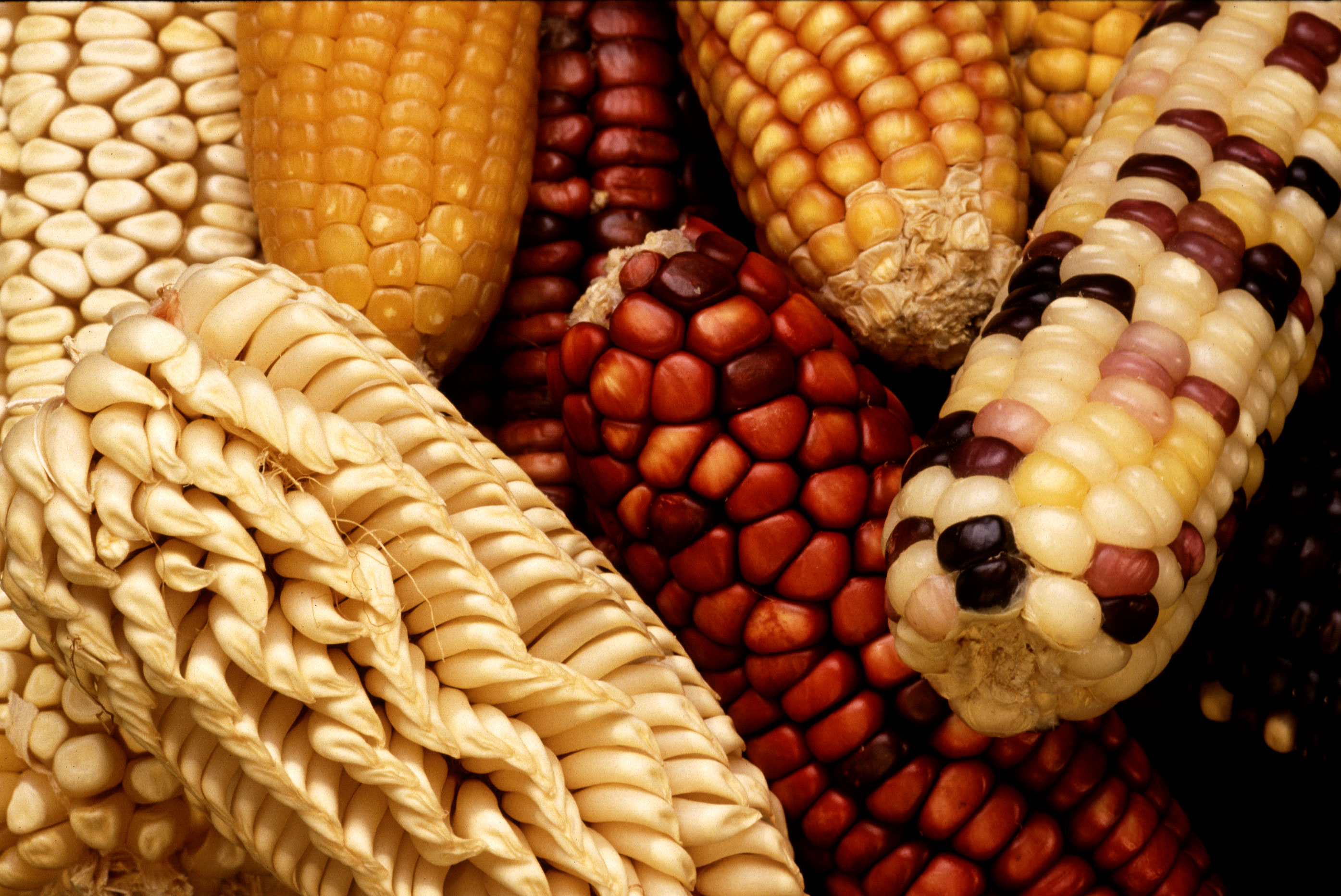
(Image Information: Maize
Keith Weller (USDA) Source: Wikipedia)


The Creation
  • How important the Elk was in describing the way the world's workings came about
    • Maybe use another animal as a storytelling style and see how that might change the story
  • How much symbolism there was - that everything in the world had its own symbolic creation
  • The Osages were the ones questioning creation
    • Maybe make a new story regarding a different topic of creation and use different animals/groups to tell the story
      • For example, if a child asks his mother and father where he/she came from.
Sacred Legend
  • I like how there was progressive action
    • Each new discovery built upon another
  • You could use this "progressive" storytelling style in explaining any chronological historical event
  • I'm not sure what story I could make out of this, but I do like how each paragraph builds on each other so that's something to keep in mind when storytelling.
The Legend of the Peace Pipes
  • The meaning behind the peace pipes is understood by the end of the story
  • I like the use of the different eagles to show why the particular spotted eagle was chosen as the one to make peace pipes
  • I could do a storytelling that might involve a teen learning to make a peace pipe and understanding the legend in his journey to making a peace pipe
The Sacred Pole
  • I like how one item becomes the sole focus of the story, and by the end, something that seemed so trivial at first becomes a major turning point in the story
    • This style of writing could be used to retell any type of incident story that I try to retell
  • Maybe retelling this story from a first-person perspective might be really interesting 
Old-Woman-Who-Never-Dies
  • I really like how this story explains the beliefs behind seasons and how that affects animals and agriculture
    • This would be a fun story to retell in a way that could be found in a children's book to explain the reasons behind season changes, and why animals migrate
Bibliography: Judson's Great Plains Unit Reading Guide Part A

Sunday, October 15, 2017

Week 8 Extra Reading: Ancient Egyptian Myths

(Image Information: Ra on the Solar Boat
Jeff Dahl Source: Wikipedia)

For extra credit reading, I decided to take on the Egyptian Myths unit. It was really interesting to read about Ra, and the way his name was given. It was also interesting to read more about the Sun God. I think what really intrigued me the most about this unit was how similar these stories are regarding the creation of the different deities in Hinduism. I am still unclear as to what religion this would fall under, exactly. But, what it was really cool is that each thing (sun, moon, etc) has its own special meaning. 

Something that I really liked was the story where Ra complains of people who talk badly of him and he goes seeking advice on what he should do. I think the message in this story could easily be modernized, and have a more modern twist. I think this is still a concern people have all the time. If I get a chance to write a story about this tale this week, I will definitely do so. I think I will keep the characters the same, but develop them to be more modernized. Maybe I might make Ra a teenager or a college student, and have the God in which he seeks advice as an adult figure or just another friend that is the same age as him. 

If I get the chance to read Part B of this unit, I will definitely do so. I really liked this unit!

Bibliography: Ancient Egyptian Myths and Stories by Donald Mackenzie Reading Guide A

Tuesday, October 3, 2017

Week 7 Reading A: Nigeria

(Image Information: Man Proposing to Woman
Clkr-Free-Vector-Images Source: Pixabay)

~~~

I decided to read the Nigerian folktales unit, and out of all the stories that really struck out to me was the first one called "Of the Pretty Stranger Who Killed the King". This story ends with the message "Never marry a stranger, no matter how pretty she may be". This really made me think about the life lesson that just because someone is beautiful on the outside, they might not be beautiful on the inside. This can also relate to the message that looks aren't everything.

I think I may want to keep this same message idea and reword it in one the ways I have already stated. I want to make this story more applicable to college students, especially those who may wonder when they'll ever meet their life partner and how crucial it is choosing the right life partner.

This is something that my parents talk about all the time. They say I should marry someone that I can relate to in education, family values, and goals. Love is a complicated thing, but we also need to make sure we are not just thinking with our heart but our heads too.

I think I'll use this image I have attached here in my story. I am excited to see if this is the story I end up writing this week or end up finding a better Nigerian folktale in the Part B reading. 


Bibliography: "Folk Stories from Southern Nigeria" by Elphinstone Dayrell Reading Guide Part A

Thursday, September 28, 2017

Week 6 Reading Part B

(Image Information: Happy Brown Cat Holding Up Hands
Rikki's Refuge Source: Flickr)

~~~

In this reading unit, I decided to read the stories written by Bidpai. It was interesting to read the connection between Bidpai and Aesop and how they are similar in terms of the stories they wrote. I could definitely see this as the stories I read by Bidpai also had a take-home message as Aesop's did. However, the messages weren't clearly stated in Bidpai's story - it was more understood.

One story that struck out to me was "The Fat Cat and the Lean Cat". I like how this story gives the message that we can be influenced by the wrong people, or the company we keep defines who we are, or even that the grass seems greener on the other side.

I would really like to personify this story and give it a more 21st-century storyline using two college students so that the takeaway message is more relevant to students. However, like Bidpai, I wouldn't make the takeaway message loud and clear. I would incorporate it into the story for readers to figure out, and of course, mention this in my author's note.

Bibliography: Fables of Bidpai Reading Guide Part B


Saturday, September 23, 2017

Extra Reading Week 5: Indian Fairy Tales Part A

(Image Information: Broken Earthen Pot
Anton Croos Source: Wikipedia)

Reading the Part A of Indian Fairy Tales was really interesting! I never actually got to read these while in the Indian Epics class so this was a great chance to read something new. I really enjoy Indian Folktales and Fairytales because they usually have an underlying message. Usually, many carry on from generation to generation. My dad always uses Indian Tales as a way to teach us life's various lessons, and I know so many by heart because he's said them so many times!

In Part A of the reading, I really enjoyed the story of the broken pot. The story itself talked about a man who declares his plans for the future starting with this pot of rice, and eventually ends his plans by saying he would kick his future wife. He kicks the pot as an example and the rice goes spilling, inhibiting from future plans from happening. This just comes to show that bad thoughts have karma. There was a reason that that happened, and it clearly was to prevent the bad thoughts in the man's mind.

If I were to rewrite this story, I would think about making the story longer about a kid who continuously faces bad situations due to bad karma. I would then take the plot to a classroom, where this kid begins bragging to his classmates around him talking about how successful he will be, how he always gets good grades, and what plans he has for himself for the future. Only this bragging would lead him to get an email asking him to meet with the Dean of his college for a cheating incident that happened the last test -- all plans would be canceled just as in this story.

This would just be a new way to write the story that would be a 21st-century example. 

Bibliography: Indian Fairy Tales by Joseph Jacobs Reading Guide Part A


Sunday, September 17, 2017

Extra Reading Week 4: Bible Women Part A

(Image Information: Temptation of Adam and Eve
Philip Medhurst Source: Wikipedia)

~~~

Reading the biblical unit was something I wanted to do when enrolling in this class. If there's something that I don't know really much about, it's the stories of the bible. I knew of Adam and Eve, and the first time I actually heard of it was in middle school. My teacher was religious and she really wanted to convey the messages in these stories -- as I believe all religions have a takeaway message.

If I were to write a story using the story of Eve, I would consider either making it A) more modern or B) try to recreate the story from a Hindu perspective. I believe that all religions are connected somehow, and after having read the Indian Epics, I am sure there could be some way I could redo this story with a Hindu background. 

I really am excited to read more of these units and gain insight on stories of the Bible. I believe it is so important to be educated on all religions as a sign of respect and just to be more knowledgeable in general. I'll read more Biblical units this coming week, and maybe try to use one of the styles I was thinking above -- or come up with something new!

Bibliography: Bible Women King James Version from the Bible Part A Reading Guide

Monday, September 11, 2017

Reading Notes: Aesop (Winter) Part A

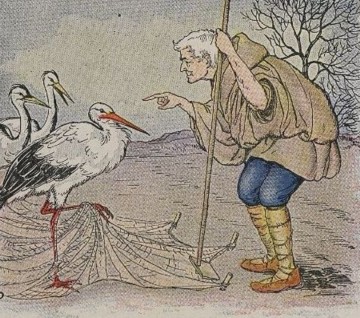
(Image Information: The Farmer and The Stork
Project Gutenberg Source: Wikipedia)

~~

I have really come to like the stories categorized under Aesop. I wanted to see how different the children's stories were, so I read Part A of Aesop's for Children story series. 

As with all of Aesop's tales, there's a takeaway message. The one that caught my eye this time was the saying "You are judged by the company you keep" in the story "The Farmer and the Stork".

I thought about using this message and creating a modern day story about a college student and his/her parent with the same takeaway message. I would want to make this story much longer than what the fable was here. I will still keep the same plot line where one character is found in the same community of other characters, and judged accordingly.

Maybe I could even use the fake social media image generator to have some type of personal image to support the story I write. 

Maybe after I read Part B tomorrow I will have a better idea of the story I wish to recreate.

Bibliography: Aesop for Children (Winter) Link to Online Reading Guide here

Wednesday, September 6, 2017

Reading Notes: Aesop's Fables Part A

(Image Information: Bunny
Clker-Free-Vector-Images Source: Pixabay)

~~~

In Part A of Aesop's Fables, I really took notice of the "take-away" messages of each fable. These were the most important part for me in the stories. Each and every one of these fables were short, simple, and very strong in delivering the messages they planned to give. 

However, there were two takeaway messages in the "Hares" fables that I particularly took interest in. The story of "The Hares and the Frogs" by Jacobs delivered the message that "there is always someone worse off than yourself". When thinking about the comparison in terms of feedback, I realized that this was a message that was important to think about. When rewriting this story, I would like to incorporate this message in a more positive way because the wording currently is very negative. The story of "The Hares and the Frogs" by Crane delivers the message that "our own are not the only troubles" and this is a mentality that I feel like we often forget. We all have our troubles, but we never take the time to realize that people around us are going through similar things. 

I would like to come up with my own fables that utilize this message in some way. I will still keep the aspect of simple characters and plot line, but give a more human characteristic to the story so that other readers can relate. 

Bibliography: Aesop's Fables "Hares" by Joseph Jacobs, link to reading online. 

Wednesday, August 30, 2017

Reading Notes: Aesop's Fables - The Lions

(Image Information: Aesop's Fables
D.D. Meighen Source: Flickr)

~~~

I was completely enchanted by all of the lion fables. They were short, sweet, and had a long-lasting effect with the simple message that was given to each story. My two favorites were The Lion and the Statue, and the Lion in Love (link found here). 

The message in both of these short fables was very strong. I think if I might want to recreate one of these stories and make it lengthy. While this short story can give a strong message, I wonder if I can get the same effects with making a long story with the same characters, same message, and maybe a little different plot. 

This style of writing was very effective with its small amount of characters, simple storyline, and simple language. I want to see if I can emulate this with the same amount of characters, a more complex storyline but still with simple language. Maybe more like a storybook type of story in which children can read to understand the takeaway message.

 Excited to see what I end up writing about!

Week 14 Extra Reading: Georgian Folktales Part A

I decided to do an extra reading this week, and came across Georgian Folktales! Below are the notes I took from some of the stories I reall...